SENPAI: Building a Creative-Tech Community from Scratch
January 1, 2017
SENPAI
A mentorship-driven community and talent accelerator for African creatives — and the painful lesson about what happens when you build a movement without building a management system.
How It Started
I was in college in Lagos and kept seeing the same thing: people with real creative ability — designers, photographers, writers, developers — who had no idea how to turn that ability into a career. The tech industry was growing. Opportunities existed. But there was a gap between where these people were and where they could go, and nothing bridging it.
The existing options weren't built for them. Expensive bootcamps cost more than most people could afford. Online communities were noise — no structure, no mentorship, no accountability. YouTube could teach you skills but couldn't teach you how to think, how to collaborate, or how to present yourself in a professional context.
I thought: someone needs to build this. And then I thought: why not me?
I named it SENPAI — the Japanese word for an experienced guide who leads through example, not instruction. The idea was simple. Not a school. Not a bootcamp. A community of people who were a few steps ahead, pulling others forward.
I designed the brand myself. Built the early community manually — one conversation at a time. And ran events out of my own pocket because I believed in what we were building.
The Numbers
| Metric | Value |
|---|---|
| Community Members | 2,000+ |
| Email Subscribers | 3,000+ |
| Total Cohorts Run | 4 |
| First Cohort — Students Enrolled | 157 |
| First Cohort — Groups | 13 |
| First Cohort — Mentors | 6 |
| First Cohort — Graduates | 45 |
| Graduates Earning in Dollars / at Top Firms | ~35 (78% of graduates) |
| Tracks Offered | 5 |
| Course Length | 6 weeks (Design 101) |
| Course Price | ₦4,999 |
| Total Course Revenue | ~₦1,000,000 |
| Events Run | Multiple (incl. Social Media Week Lagos) |
| Community Medium Publication | Active (writers program) |
| Timeline | 2017 – 2021 |
My Role
Founder / Curriculum Designer / Community Manager / Brand Designer / Newsletter Writer
I did everything in the early years — and that was both the strength and the eventual problem.
I designed the SENPAI brand from scratch: logo, identity, visual language. I built the curriculum for Design 101, the flagship course under Senpai Academy. I recruited and managed mentors. I ran the WhatsApp groups. I wrote the newsletter. I organized and facilitated events. I operated the social enterprise model — earning revenue through services and reinvesting it into scholarships and programs.
There was no team in the traditional sense. There were community members who stepped up, and a Co Ops model I eventually built to distribute responsibility. But for most of this period, the community ran on my energy.
The Problem
Young creatives in Nigeria and across Africa were hitting the same wall.
They had the talent. Photography, design, coding, writing — raw creative ability was not the shortage. What was missing was structure: a way to go from "I'm interested in this" to "I can do this professionally."
The specific gaps:
- No career pathway: Knowing what design is and knowing how to become a designer are completely different things. Nobody was bridging that.
- No accountability structures: Self-study works for motivated individuals in isolation. It breaks down for most people without community, feedback, and deadlines.
- No professional exposure: Nigerian tech was growing, but the networks, the language, the way professionals communicated — most creatives didn't have access to that.
- No measurement: Existing communities counted followers, not outcomes. Nobody was tracking whether their programs actually changed anyone's career trajectory.
How People Currently Solved This
| Option | Limitation |
|---|---|
| Expensive bootcamps | Cost-prohibitive. Out of reach for most Lagos creatives. |
| YouTube / self-study | Skills without context. No mentorship, no accountability, no community. |
| Twitter / Facebook groups | Unstructured. High noise, low signal. No programs, no outcomes. |
| University design programs | Theory-heavy. Disconnected from industry. Not building practitioners. |
| Informal mentorship | Depends entirely on who you know. Not scalable. Not equitable. |
The gap: Nobody was combining structured curriculum + mentorship + community + real projects + career outcomes in an accessible, affordable format.
The Innovation
SENPAI wasn't a school. It wasn't a social media community. It was a structured ecosystem:
Design 101 (Senpai Academy): A cohort-based curriculum with mentors, WhatsApp sub-groups, weekly assignments, and real projects. Built to teach design thinking, not just design tools.
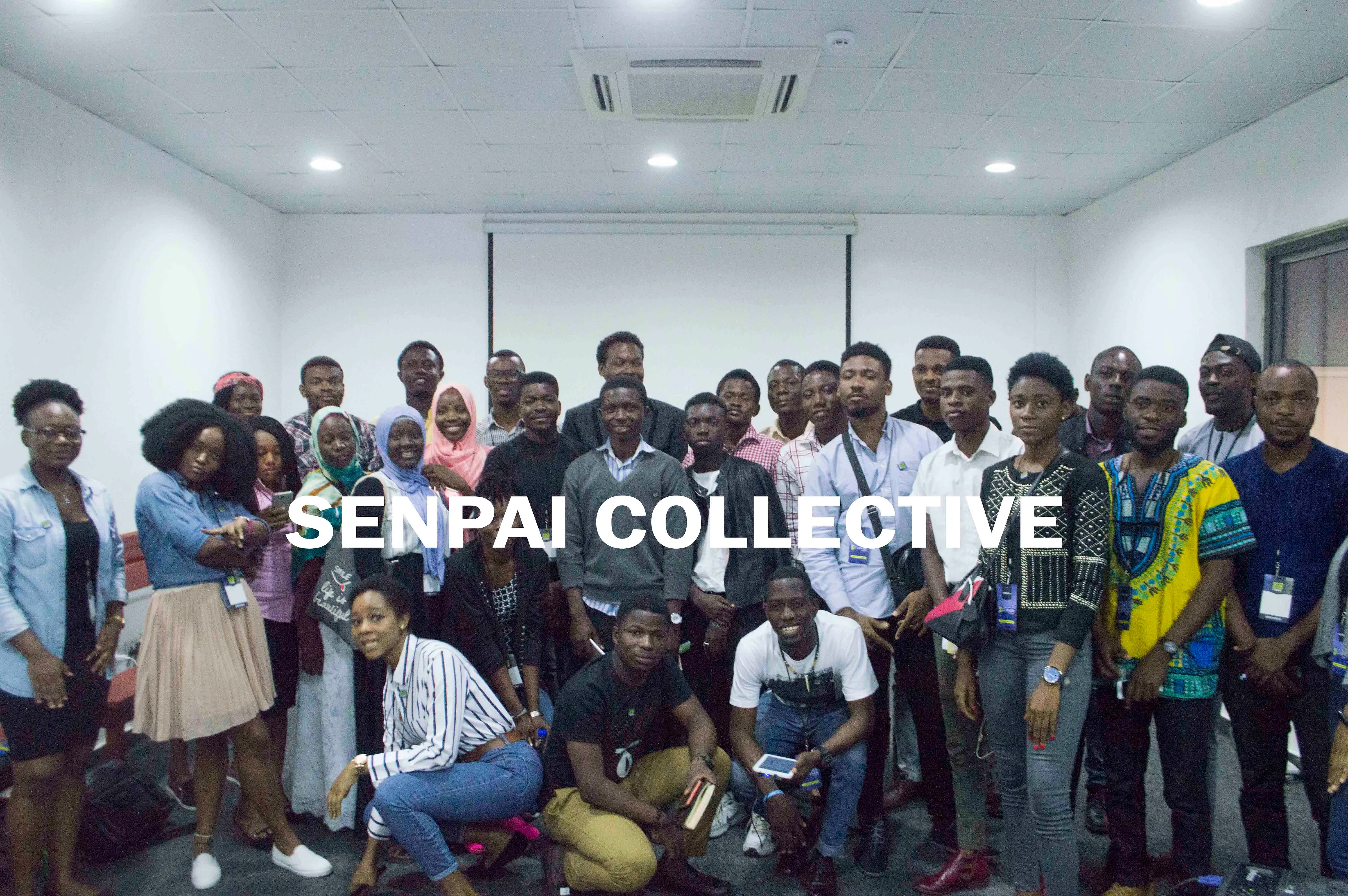
Senpai Collective: The broader community of 2,000+ members — a platform for connection, collaboration, and opportunity.
Writers Program: A Medium publication where community members documented their learning journeys publicly. This served two purposes: it developed their communication skills and it created a proof-of-learning record that employers could see.
Co Ops (Community Operations): A model that identified the most passionate members and gave them real responsibility — driving vision, outsourcing to clients, supporting founders inside the community.
Social Enterprise Model: Revenue from training programs and design services, reinvested into scholarships and community resources. Proof that profit and purpose can work together.
The core belief: community building is a design problem. You design the experience, you design the incentives, you design the systems. If those systems work, the community grows and sustains itself. If they don't, it runs on the founder's personal energy — which is not scalable.
System Discovery
Who Were These People?
Before building any program, I needed to understand who exactly I was building for. Through early events and conversations, three distinct types of community members emerged:
The Aspiring Creative: Talented but directionless. They knew they liked design or tech but had no idea where to start or what a career in it actually looked like.
The Skill Builder: Already had some skills but lacked the professional context, vocabulary, and network to convert those skills into opportunities.
The Connector: Socially motivated, driven by relationships and collaboration. They came for community first and grew through it.
The decision: Build programs for the Skill Builder, because they had the highest potential for measurable outcomes (employment, projects, earnings). The Aspiring Creative and Connector would benefit too — but if the curriculum worked, it would pull all three types forward.
What Did They Actually Need?
| Need | What Most Communities Offered | What SENPAI Built |
|---|---|---|
| Direction | None | Structured 6-month curriculum with tracks |
| Accountability | None | Weekly assignments + mentor check-ins |
| Mentorship | Random, inconsistent | Assigned mentors in WhatsApp sub-groups |
| Community | Passive group chats | Events, Co Ops, writers program |
| Opportunities | None | Collective Talents / Freelancers / Founders model |
The Accelerator Architecture
Design 101 — How It Actually Worked
Design 101 was the flagship course under the Senpai Academy umbrella. The first cohort enrolled 157 students, organized into 13 WhatsApp sub-groups with 6 mentors. That structure meant no student was ever in a group of more than 12-15 people, and each group had a dedicated mentor for direct feedback and accountability.
Full curriculum — 6 weeks:
| Week | Topic | What Students Left With |
|---|---|---|
| Week 1 | Introduction to Design + Figma + Maslow's Hierarchy | A mental model for why design matters, not just what it looks like |
| Week 2 | Visual Hierarchy | Understanding how the eye moves and how to control it |
| Week 3 | Layout & Composition | Structure, spacing, and how to organize information |
| Week 4 | Typography | Type as a design tool, not just a text choice |
| Week 5 | Color Theory | Color as communication, not just aesthetics |
| Week 6 | The Design Process | End-to-end: problem → solution → iteration |
Why this structure mattered: Most design courses start with tools. Design 101 started with thinking. Week 1 wasn't "here's how Figma works." It was Maslow's Hierarchy of Needs — understanding that design exists to serve human needs, not just look good. Students who came in thinking design was "shapes, colors, and a submit button" left with a framework for solving problems. The tools came later, in a context that made them meaningful.
Mentorship model: Each WhatsApp group had a mentor who was a few steps ahead — not a senior industry professional, but someone who had been through the material and could give direct, contextual feedback. This kept the mentorship relatable and response times fast.
The weekly assignment structure: Every week ended with a practical task — not reading, not watching, but applying. Week 1: find 2 websites with good design and 2 with poor design, explain why. Week 2: apply 3 Gestalt principles, show your work. Students couldn't passively absorb and move on. They had to produce something.
Pricing: ₦4,999 — deliberately cheap to remove the cost barrier. All revenue went back into the mission. Across 4 cohorts, the course generated approximately ₦1,000,000 in total revenue. Not enough to run the operation sustainably, but proof that people would pay — even at a low price point — for something they believed in.
What happened to the graduates: 45 of 157 students completed the full program. Of those 45, approximately 35 are now earning in dollars, working at top-tier firms, or running their own companies. That's 78% of everyone who made it through — without any formal employer pipeline, job board, or placement program. They went out and built careers with the foundation the course gave them. Most are more successful today than I am. That's the part I'm most proud of, and the part that still stings a little.
What students said:
"I realized I knew nothing. Compared to what I was doing, I was just putting together things that looked aesthetically nice. Glad I took the course because I'm a much better designer." — Agboluaje Quadri
"A year later I can see a noticeable difference in my work. I am better as a designer." — Aina-Badejo Pelumi
"Design 101 was my first official introduction to design education... It basically set me on a path to seek more knowledge and see design as a way of life." — Imasuen Osamudiamen
"I realize how much I missed learning with people." — Aliyu Sofiya
The Broader Talent Accelerator
Alongside Design 101, the full talent accelerator ran across 5 tracks:
| Track | Focus |
|---|---|
| Product Design | UX/UI, systems thinking, design tools |
| Frontend Development | HTML, CSS, JavaScript fundamentals |
| Backend / Cloud Engineering | Server-side development, cloud infrastructure |
| Project Management | Product thinking, stakeholder management |
| Mobile Development | Cross-platform mobile development |
Graduates worked on real projects — not case studies, but actual builds — creating a portfolio before they left.
Community Operations
Running a community of 2,000+ people is not a part-time activity. Here is what "operations" actually meant:
Events: In-person events in Lagos — hackathons, meetups, and the breakthrough moment: Social Media Week Lagos. That first public-facing event was the first time I stood in a room full of SENPAI members and heard them articulate their dreams out loud. It shifted something in me. It made the mission feel real in a way that a growing Slack channel never could.
Newsletter: The newsletter reached 3,000+ subscribers at its peak. It covered community updates, design thinking, career advice, and the honest journey of building SENPAI. The writing came from me, but it became a platform for community voices too through the writers program.
Writers Program: Community members published their learning journeys on the Senpai Collective Medium publication. One student, Aliyu Sofiya, published a piece after completing Design 101 that captured exactly what the program was designed to create: someone who came in thinking design was "draw shapes, colour them, splash text" and left understanding Maslow, Gestalt, and how human psychology connects to visual design. Her closing line: "I realize how much I missed learning with people." That was the whole point.
Co Ops Model: When I realized I couldn't run everything myself, I built a structure to distribute responsibility. I identified the 10 most passionate members and formed the Co Ops — active members who worked with the team to drive the vision. Within Co Ops, three segments emerged:
- Collective Talents: Skilled members outsourced to client projects on contract
- Collective Freelancers: Members available for freelance work
- Collective Founders: Members building businesses, supported by community resources
This was the first real attempt at building a community that could generate income and create value for its members simultaneously.
The Pilot
What Worked
The curriculum produced real outcomes. Almost every graduate from the first Design 101 cohort is working a remote job today. That's not a statistic from a survey — that's what I know from staying in contact. The program worked.
The mentorship model scaled. WhatsApp sub-groups with assigned mentors meant students had direct access to feedback without everything running through me. The system could handle more students without the attention degrading.
The community had real energy. Social Media Week Lagos proved it. When you get 2,000 people across Africa who believe in the same thing and put 50 of them in a room together, you feel it. The community wasn't just numbers — it was real relationships.
The writers program created public proof. Student testimonials on Medium, published by students themselves, became the most authentic marketing SENPAI had. Nobody asked them to write it. They did it because the experience meant something.
Where It Broke Down
The first community model failed fast. Early on, before I understood what I was building, I opened a Slack group. Got 300+ signups quickly. Felt like growth. Then the engagement collapsed — ghost accounts, empty channels, no culture. What I learned: you can't shortcut the manual phase of community building. A community of 300 people who don't know each other isn't a community. It's a list.
I had to abandon that model and restart with intention: identify the most passionate people, build real relationships one at a time, and let them pull others in.
The price point couldn't sustain the operation. ₦5,000 per student for a 6-month mentorship-based program with weekly assignments and dedicated mentor support is not a business model. It removed the cost barrier — which was the right call for access — but meant the program ran at a loss. The social enterprise revenue from design services was meant to cover this. It helped, but not enough.
Placement was organic, not systematic. The most important outcome — graduates getting jobs — happened, but not because of a formal pipeline I built. It happened because the students were genuinely skilled and went out and found opportunities themselves. I never built the employer relationships, the job board, the placement infrastructure. So I couldn't measure it, couldn't market it, and couldn't guarantee it to future students.
Management without systems = burnout. Managing 2,000+ people, running programs, writing a newsletter, facilitating events, coordinating mentors, handling the Co Ops, doing client work to fund everything — all of this eventually became too much. The community grew faster than the infrastructure supporting it. When you're the only system keeping everything running, you don't burn out slowly. You burn out suddenly.
I had no bird's eye view. This is the specific thing that broke it. I could DM someone on Instagram. I could message a person directly on WhatsApp. I could check in on a student. But I had no way to look at the community as a whole — who was active, who had gone quiet, who needed attention, who was ready to be pushed further. Every interaction was individual and reactive. There was no system sitting above it all, giving me a picture of what was actually happening. At 100 people, you can manage that with memory and instinct. At 2,000, you can't. And because I couldn't see the community, I couldn't manage it — I could only respond to whoever was loudest at any given moment. That's not community management. That's triage.
Opportunities had nowhere to land. One of the main promises of SENPAI was that being part of the community would open doors. And it did — but inefficiently. If someone came to me needing a designer, I had no quick way to find the right person. I'd message someone and find out they already had a full-time job. Message another and find out they weren't taking clients. The knowledge of who was available, what they did, and what they were looking for existed nowhere except inside individual WhatsApp conversations. Matching people to opportunities — which should have been one of the community's strongest value propositions — was slow, manual, and unreliable.
Rules existed in people's heads, not in the system. As the community grew, so did the ambiguity — what was expected of members, what the norms were, what happened when someone didn't show up for a cohort or broke a collaboration agreement. I had values. I had culture. But none of it was formally documented or enforced through any structure. When community rules live only in the founder's head, they can only be enforced through the founder's direct intervention. That doesn't scale — and it makes the whole thing fragile.
Why It Paused
| Factor | What Happened |
|---|---|
| Founder as bottleneck | Built straight out of college, no prior work experience — I was learning in real time while being responsible for 2,000 people. The brand outgrew the founder. |
| Identity gap | SENPAI had a face but it wasn't mine. No personal brand, no independent identity — I was limiting the brand's ceiling without realizing it. |
| No visibility infrastructure | 2,000 members with no platform, no profiles, no activity tracking — just scattered WhatsApp groups and Instagram DMs. |
| No opportunity matching | Clients and collaborations couldn't be routed efficiently — member availability and skills existed nowhere in any queryable form. |
| No rules enforcement | Community norms were cultural, not structural. As the community grew, ambiguity grew with it. |
| Burnout | No management infrastructure meant everything ran on personal energy. That energy ran out. |
| Revenue gap | ₦5,000 courses couldn't fund the operational overhead of running programs at this scale. |
| No placement pipeline | The value graduates got was real but informal — couldn't codify or guarantee it. |
I was the bottleneck. Not just operationally — personally. I built SENPAI right out of college, with no real work experience, no established identity, no personal brand. SENPAI grew faster than I did. At a certain point, I realized that SENPAI had a face — and it wasn't mine. I was the person behind the brand, doing all the work, but I had no independent identity. No one knew Henry Ikoh. They knew SENPAI. And that meant the brand was both bigger than me and entirely dependent on me at the same time. That's an unsustainable position.
The decision to step away wasn't just about burnout. It was about recognizing that I was limiting the brand's ceiling by not first building my own. I needed to develop my capacity, my skills, my presence — so that when SENPAI came back, it would have someone behind it who could actually carry its weight.
There's also something nobody tells you about building a community: it's not easy watching the people you trained surpass you. Seeing students from the first cohort earning in dollars, working at top firms, building companies — while you're still figuring things out — hits differently than you'd expect. You're proud. And it stings. Both things are true at once. That tension is part of what pushed me to go build something of my own before returning.
What didn't fail: the mission. The concept. The proof that structured, affordable, mentorship-led education works for African creatives. Every graduate who landed a remote job is evidence that SENPAI worked. The system that delivered those outcomes just needed a founder who had grown into it — and I hadn't yet.
Results
| Metric | Result | What It Proved |
|---|---|---|
| 2,000+ community members | Organic growth across Nigeria and Africa | The problem resonated. People came because they wanted this. |
| 3,000+ email subscribers | Newsletter retention over multiple years | The content had genuine value. People stayed subscribed. |
| 4 cohorts | Multiple cohorts across 5 tracks | The model could run repeatedly, not just once. |
| 157 students in first cohort | 13 groups, 6 mentors | The WhatsApp mentor model could handle real scale. |
| 45 graduates from cohort 1 | 29% completion rate | Completion in a free/cheap cohort is hard. Those who finished, meant it. |
| ~35 earning in dollars | 78% of graduates at top firms or running companies | The training worked. The foundation held. |
| ~₦1,000,000 in course revenue | Generated at ₦4,999/student across 4 cohorts | Demand existed even at the lowest viable price. |
| Writers program active | Student-generated content on Medium | Community members felt ownership over the SENPAI story. |
| Social Media Week Lagos | First major public event | The community existed beyond online — real people, real energy. |
What I Built and What I Learned
What SENPAI Actually Built — In Me
I started SENPAI straight out of college with no real work experience. No background in product, engineering, or business operations. Everything I learned, I learned by doing it — usually for the first time, usually under pressure, usually while trying to make sure it didn't fall apart for the 2,000 people depending on it.
I taught design. I also learned to code. I ran programs. I also learned how to manage people. I wrote a newsletter. I also learned how to communicate ideas clearly enough that strangers would stay subscribed for years. SENPAI wasn't where I applied skills I already had. It was where I developed almost everything I now have.
The social impact of that kind of learning is hard to overstate. People skills. Empathy. How to hold space for someone who's struggling. How to motivate a group. How to give feedback that builds instead of breaks. How to show up consistently when nobody is watching. None of this comes from a course. It comes from being responsible for real people's growth — over years, not weeks.
SENPAI was my real foundation.
Skills Demonstrated
Curriculum Design: Built a learning sequence from first principles — not "what tools exist?" but "what does a designer need to understand before touching any tool?" Designed weekly assignments that required application, not just reading.
Community Architecture: Designed and iterated the community model multiple times — from open Slack (failed) to WhatsApp mentor groups (worked) to Co Ops (scaled responsibility). Each iteration came from observed failure, not theory.
Brand Design: Designed the entire SENPAI identity from scratch — logo, visual system, personality. Built something recognizable on zero budget.
Content and Communication: Wrote a newsletter to 3,000+ people over multiple years. Managed a community publication. Developed a voice that people trusted enough to stay subscribed.
Engineering: Learned to code through SENPAI — building the tools and platforms the community needed. No prior background. Learned by necessity.
Social Enterprise Operations: Built a model where client revenue funded community programs. Proved the concept works — also learned where it breaks at scale.
Facilitation: Ran events, workshops, and cohort programs. Learned how to create environments where people feel safe to learn and share.
People management: Coordinated mentors, managed community dynamics, handled conflict, built trust across hundreds of relationships simultaneously. The kind of skills you can only develop by doing them at scale.
The Lessons That Changed How I Work
Community is a product. Design it like one. The Slack group failed because I launched without designing the experience. 300 signups felt like traction. It was actually just noise. Real community requires intentional onboarding, culture, and recurring value — designed from the start.
Start with the most passionate. The Co Ops insight changed my mental model for growth. You don't build a community by broadcasting to everyone. You build it by going deep with the people who care the most, and letting them pull others in.
Free is not sustainable at scale. ₦5,000 for a 6-month program was a generous price. It was also a slow bleed on the operation. Access and sustainability are both important — and you have to design for both from the start, not hope revenue appears later.
Placement is the product, training is the process. I trained 100+ students and got ~85% placed — but that placement happened without any system I controlled. That means I couldn't guarantee it, couldn't measure it properly, and couldn't build a business on it. The value was real. The pipeline wasn't.
The management layer is the real scaling problem. You can design a great curriculum. You can build real community. But if you haven't designed the system for managing 2,000+ people's journeys, you'll hit a wall. Not a talent wall. Not a demand wall. A human capacity wall. And it comes faster than you expect.
Visibility is infrastructure. The most expensive mistake wasn't pricing or placement — it was having no platform. No profiles. No way to see the community as a whole. Everything lived in scattered WhatsApp groups and Instagram DMs. When you can't see your community, you can't manage it. You can only respond to whoever messages you first. The solution isn't more effort — it's a system that makes the invisible visible.
Opportunity matching only works if member data is structured. The community had value to offer — clients, collaborations, referrals. But none of that value could flow efficiently because there was no way to query the community. Who's available? Who does what? Who's looking for clients right now? That information existed in people's heads and DMs, not in any system. A community without structured member data can't match opportunities at speed. It can only hope the right message reaches the right person.
Rules that aren't in the system don't exist. Shared values matter. Culture matters. But culture without enforcement structure degrades over time. Contracts need to be clear. Expectations need to be documented. Community rules need to be baked into how the platform operates — not enforced case-by-case through the founder's judgment. Structure and warmth aren't opposites. The right structure is what makes warmth sustainable.
If I Built This Today
| Phase | Then | Now |
|---|---|---|
| Community launch | Open Slack to everyone | Closed waitlist, manual intake of 20–30 enthusiasts first |
| Cohort size | 157 students, 13 groups, 6 mentors | Smaller first cohort (30–50) to protect completion rate and culture |
| Program pricing | ₦4,999 flat | Tiered: subsidized for selected students, full price for sponsored seats |
| Placement | Organic, informal | Employer relationships built before the first cohort launches |
| Community infrastructure | WhatsApp + Instagram DMs, no platform | Members on a platform with profiles, availability status, and skills — visible at a glance |
| Opportunity matching | Manual DMs, hoping someone was free | Structured member profiles so opportunities can be matched in seconds, not days |
| Community rules | Informal, founder-enforced | Documented, in the platform — structure is how culture becomes consistent |
| Community management | Solo, ad hoc | Co Ops model from day one, with documented responsibilities |
| Success definition | "People are enrolling" | "X% of graduates employed within 6 months" — defined before launch |
SENPAI didn't fail because the problem wasn't real. The problem is real. It didn't fail because the curriculum didn't work. It worked. It paused because the infrastructure couldn't keep up with the mission — and because the founder needed to grow into the role the brand was demanding. Both of those are solvable problems. And solving them is exactly what the time away has been for.
The Process Behind the Work
Every project runs through the same system.
Discovery → Architecture → Solution Design → Pilot. Each phase delivers a standalone result. You always know what's broken, why, and what to do next — before committing to a full build.
See exactly how I work →Have a system that needs fixing?
Whether you're a founder building from scratch, an organization with broken operations, or a social enterprise ready to scale — let's figure out what's actually wrong before we talk about solutions.